























Optics ODM

Quick answer: What is ODM optical design manufacturing and optoelectronics fabrication? ODM optical design manufacturing encompasses end-to-end electro-optical development, combining optical design, computer-aided simulations, precision optic fabrication, optical thin-film coating, and optomechanical sub-assembly. By executing design for manufacturing (DFM) optics, engineering facilities deliver custom optical prototyping, precision molding (glass and plastic aspheric optics), micro-optics (DOE/HOE diffusers), and full-scale opto-electronic assembly services under strict quality standards.
Optical Design Manufacturing Service — Optics & Photonic Development
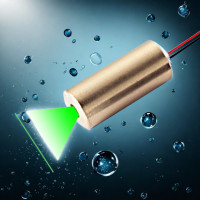
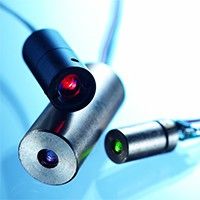
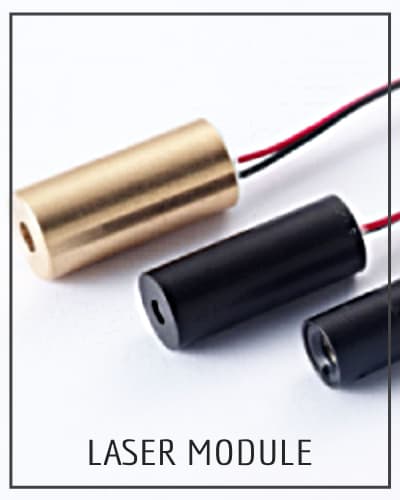
 Our engineering and manufacturing facilities provide end-to-end custom optical design manufacturing services and contract manufacturing for photonic electro-optical subsystems, complex laser modules, and advanced optical systems. We possess comprehensive in-house optics design capability, an integrated circuit (IC) design division, and dedicated optomechanical and electronic assembly engineering teams.
By leveraging advanced optical design software, stray light simulation, and strict Design for Manufacturing (DFM) protocols, we bridge the gap between initial optical prototyping and high-yield volume production. This makes IADIY an ideal turnkey partner for clients seeking to outsource critical electro-optical designs, custom optic fabrication, and complex optoelectronics fabrication responsibilities.
Laser Patterning — DOE, HOE & Optical Diffusers
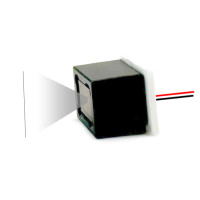
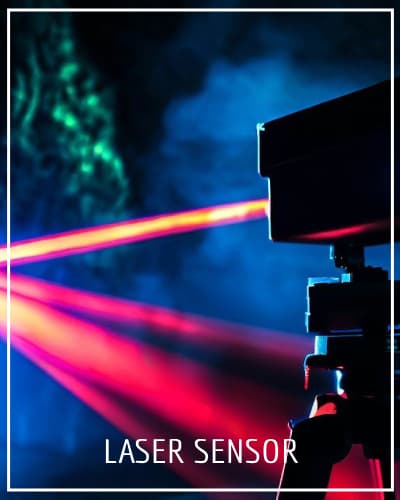
 We provide high-precision custom optical design and micro-optic fabrication services tailored for specialized laser pattern generation. Diffractive Optical Elements (DOE), Holographic Optical Elements (HOE), and engineered optical diffusers allow exact manipulation of laser beam shapes, spot arrays, structured light grids, and homogenizing profiles.
Through advanced computational wave-optics modeling, lithographic mask design, and wafer-based semiconductor etching techniques, our DOE and HOE optics achieve high diffraction efficiency, exceptional beam uniformity, and compact mechanical footprints ideal for 3D sensing, LiDAR, medical laser devices, and machine vision systems.
- Optical System Co-Engineering: In-depth technical support and optical simulations for complex laser projection layouts.
- Custom Laser Patterning: Tailored DOE grid generation, crosshair creation, random dot patterns, and wide-angle diffusers.
- Rapid Optical Prototyping: Cost-effective wafer-level prototype fabrication with short turnaround cycles.
- Volume Wafer Replication: Scalable polymer-on-glass or etched fused silica micro-optic volume manufacturing.
Glass Molded Aspheric Lenses
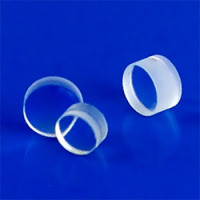
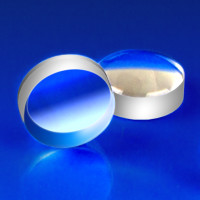
 Glass molded aspherical lenses eliminate spherical aberrations using a single lens element while delivering higher optical efficiency, compact assembly sizes, and thermal stability superior to traditional ground and polished spherical lenses. Utilizing state-of-the-art Precision Glass Molding (PGM) technology, we produce high-performance glass aspheres suited for high-power laser diodes, optical communications, and thermal imaging systems.
- Cost-Competitive PGM Tooling: High-durability tungsten carbide molds designed for continuous high-temperature molding runs.
- Superior Optical Performance: Sub-micron profile accuracy and low surface roughness (Ra < 10 nm).
- Design & Simulation Support: Zemax/Code V optimization for focal length, numerical aperture (NA), and working distance.
- In-Line Quality Assurance: Automated Zygo wave-front interferometry and surface profilometer machine inspection during mass production.
Molded Plastic Aspheric Lenses
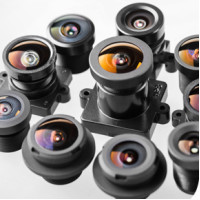
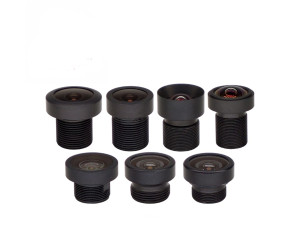
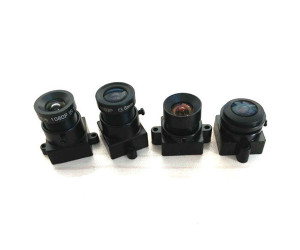
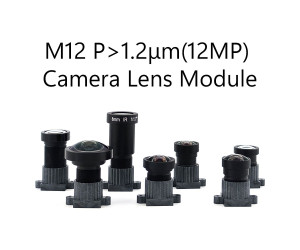
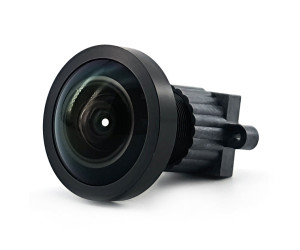
 Our injection molded plastic aspheric lenses are engineered for spherical aberration correction, high light-gathering power, high-precision focus control, and extreme mechanical weight reduction. Plastic optics excel in high-volume, cost-sensitive applications such as handheld barcode scanners, consumer sensors, camera modules, and laser collimators.
With decades of optical injection molding experience, our facility optimizes tool steel selection, cavity cooling channels, and resin shrinkage control (using PMMA, OKP, COP, and Polycarbonate polymers) to deliver stable optical performance across demanding temperature cycles.
- Optical Design & Tolerancing: Custom design for stray light mitigation and mechanical mounting flange integration.
- Ultra-Precision Diamond Turning: Single-point diamond turning (SPDT) for rapid plastic optical prototyping mold inserts.
- Scalable Volume Production: Multi-cavity automatic injection molding delivering high unit yields at competitive pricing.
| Optical Metric | Glass Molded Aspheric Lenses (PGM) | Molded Plastic Aspheric Lenses |
| Substrate Material | High-index optical glasses (N-BK7, L-BAL35, D-ZLaF52, etc.) | Optical polymers (PMMA, Cyclo-Olefin Polymer / COP, Polycarbonate) |
| Thermal Stability | Excellent; resistant to high temperatures and power degradation | Moderate; subject to thermal shift (dn/dT) in extreme environments |
| Laser Power Threshold | High; ideal for industrial high-power laser diodes & CO2 laser tools | Low-to-Medium; ideal for low-power laser pointers & LED systems |
| Weight & Unit Cost | Higher material & tooling cost; heavier mass density | Lightweight; ultra-low unit cost for high-volume consumer devices |
| Integrated Features | Standard spherical/aspherical lens geometry | Supports molded-in alignment tabs, snap-fit legs & structural housings |
Optical Thin-Film Coating & Filter Fabrication
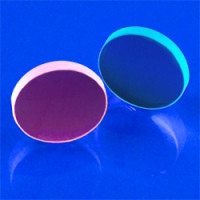
 Precision thin-film coating transforms raw glass substrates into specialized spectral filters. Our optical coating services utilize Ion-Assisted Deposition (IAD) and Electron-Beam (E-Beam) evaporation to support applications in fluorescence microscopy, Raman spectroscopy, optical gas sensing, wavelength isolation, and vision system filter enhancement.
Our optical filter coating portfolio includes anti-reflective (AR) coatings, high-reflector (HR) optical mirrors, bandpass filters, longpass/shortpass filters, dichroic beam-splitters, and polarizing beam-splitter cubes spanning ultraviolet (UV), visible (VIS), near-infrared (NIR), and short-wave infrared (SWIR) spectra.
- Spectral Optical Modeling: Custom thin-film layer stack design with optimized angular tolerance.
- High-Durability Thin Films: MIL-SPEC environmental compliance for abrasion, humidity, and thermal shock.
- Custom Substrate Geometries: Coating capability for flat windows, prisms, spherical optics, and complex optical mirrors.
- Fast Turnaround Prototyping: Flexible chamber runs accommodating low-volume custom prototypes and batch manufacturing.
Optoelectronic Systems & Photonic Solutions Development
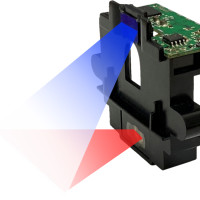
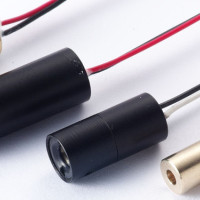
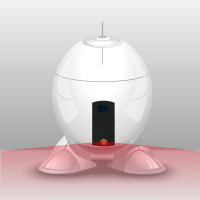
 Combining optical design, semiconductor driver electronics, precision machining, and firmware development, our engineering team specializes in creating integrated optoelectronic systems. We turn complex electro-optical requirements into functional hardware for applications such as laser rangefinders, virtual laser keyboards, time-of-flight (ToF) sensing modules, and 3D laser scanning projection systems.
- System Architecture & Feasibility: Optical budget analysis, signal-to-noise ratio (SNR) modeling, and mechanical layout.
- Multidisciplinary Engineering: Concurrent optical, precision mechanical, high-speed PCB, and firmware co-design.
- Prototyping & Validation: Functional electro-optical prototype fabrication, laser safety verification, and environmental stress testing.
Optics, Photonics & Optoelectronics Products ODM Manufacturing
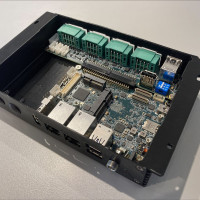
 Beyond electro-optical engineering design, we manage cleanroom optoelectronic manufacturing and full product assembly services to preserve high standards of optical alignment and cleanliness. We offer flexible supply chain management, component sourcing, custom optical tooling design, and contract manufacturing for volume product runs.
- Custom Tooling & Alignment Fixtures: Precision multi-axis active alignment stations for laser diode and sensor bonding.
- End-to-End Manufacturing Management: Seamless transition from engineering prototypes to scalable mass production.
- Supply Chain & Quality Systems: ISO 9001 and ISO 13485 certified optical inspection, traceability, and environmental testing.
Optical Mechanics, Precision Parts & Optoelectronic Module Assembly
 Optomechanical stability is vital for maintaining optical alignment across ambient thermal variations. Our precision CNC machining, rapid tooling, and custom injection molding capabilities provide robust mechanical barrels, lens holders, optomechanical brackets, and dust-proof IP-rated enclosures.
Our rapid tooling solutions allow customers to transition quickly from initial prototype testing to short-run production. With full ownership of custom injection molds transferred to the client, we ensure cost control and long-term production flexibility for low-to-medium volume optomechanical assemblies.
Key Design for Manufacturing (DFM) Guidelines for Optics
- Balance Tolerances Early: Overspecifying optical surface roughness or surface quality (10-5 vs 40-20) exponentially increases fabrication costs; optimize tolerances to functional system requirements.
- Thermal Expansion Matching: Pair glass optics with mechanical barrel materials (e.g., aluminum, brass, or Invar) featuring matching coefficients of thermal expansion (CTE) to prevent thermal defocus.
- Implement Active Alignment: For multi-element laser systems and camera modules, utilize active optical alignment during module assembly to offset mechanical machining tolerances.
- Design for Cleanroom Assembly: Ensure precision optomechanical parts are free of outgassing materials and assembled under Class 10,000 (ISO 7) or Class 1,000 (ISO 6) cleanroom environments.
Frequently Asked Questions About Optical Design & Manufacturing
What is included in ODM optical design manufacturing services?
ODM optical design manufacturing covers the complete product creation lifecycle: optical design and simulation, mechanical enclosure modeling, electronic PCB engineering, custom optical lens/filter fabrication, active optical alignment, cleanroom module assembly, and comprehensive quality testing.
When should I select glass molded aspheric lenses over plastic molded lenses?
Choose glass molded aspheric lenses (PGM) when your application demands high thermal stability, high optical power thresholds (such as laser diode collimation), or wide operating temperature ranges. Choose plastic molded aspheric lenses when lightweight construction, low unit cost, or integrated complex mounting features are required for high-volume consumer products.
What types of optical coatings can be applied to optical components?
We provide anti-reflective (AR) coatings, high-reflector dielectric optical mirrors, bandpass filters, shortpass/longpass filters, dichroic beam-splitters, and custom thin-film stacks across UV, VIS, NIR, and SWIR spectral bands.
What is the difference between DOE and HOE micro-optics?
Diffractive Optical Elements (DOE) rely on micro-structured surface relief profiles etched onto glass or polymer substrates to diffract light into engineered patterns. Holographic Optical Elements (HOE) record volumetric interference patterns in photosensitive materials, offering specialized optical functions such as high-angle light steering and transparent head-up displays (HUD).
How does active alignment improve optoelectronic assembly quality?
Active alignment powers on the optoelectronic emitter or sensor during assembly, continuously measuring beam profile or image quality in real time while precision motorized stages adjust lens positions before final UV-cure adhesive bonding.
Optoelectronic ODM Integration: IADIY Engineering Solutions
Integrating complex optical elements, micro-pattern DOEs, precision aspheric lenses, and optomechanical housings into a market-ready product requires deep multidisciplinary engineering expertise. IADIY provides custom Joint Development Manufacturing (JDM) and contract manufacturing services to bring high-performance electro-optical products from concept to mass production.
- Optical Design & DFM Optimization: Zemax optical design, stray light analysis, and mechanical tolerance budget optimization.
- Custom Optic & Coating Fabrication: Precision Glass Molding (PGM), single-point diamond turning, and custom thin-film filter deposition.
- Precision Mechanical & Tooling Engineering: Injection mold design, rapid metal tooling, and optomechanical barrel prototyping.
- Cleanroom Optoelectronic Assembly: Active optical alignment, sensor packaging, and ISO-certified reliability testing.
Whether you require a custom DOE laser projection module, molded glass aspheric optics, or turnkey contract optoelectronic manufacturing, our optical engineering team is ready to assist your project.
Planning a custom optical component, laser pattern, or optoelectronic device? Discuss your technical specifications with our optical engineers.
Discuss Your Specifications With Our Engineers →Conclusion
Successful optical design manufacturing relies on seamless integration between optical design, DFM optic fabrication, precision mechanical engineering, and cleanroom optoelectronic assembly. Understanding the functional tradeoffs between glass and plastic aspheric lenses, micro-optic DOE beam shapers, custom optical coating filters, and precision optomechanics enables engineering teams to optimize system performance while managing unit production costs.
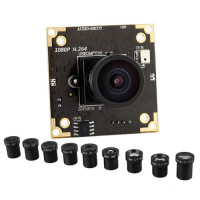
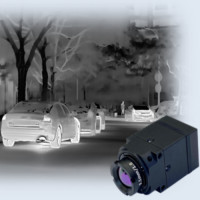
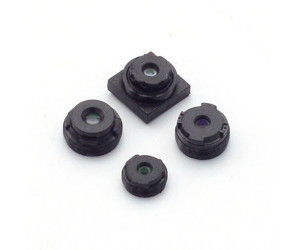
You can also explore our broad range of camera modules, thermal camera modules, and optoelectronic manufacturing and JDM capabilities.






Leave a Comment