






























Precision Glass Molding Tolerances & Ø80mm Production
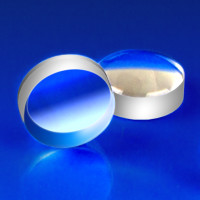
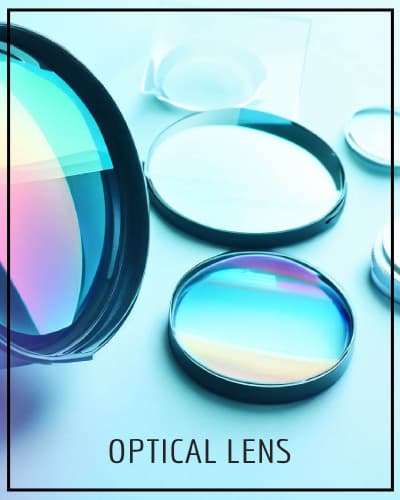
Precision optical manufacturing broadly bifurcates into subtractive material removal (grinding and polishing) and replicative near-net-shape forming (Precision Glass Molding, PGM). Most commercial molded aspheres have remained small (typically Ø1–25 mm) [6], because large-aperture glass blanks suffer severe radial temperature gradients during thermal cycling, leading to micro-fractures and asymmetric profile errors. Overcoming large-aperture thermal forming bottlenecks marks a pivotal milestone in volume optical production.
This technical report is the concluding installment of the IADIY Optomechanical JDM Technical Series: Large-Aperture Aspheric Optics Trilogy, detailing our Ø80mm glass aspheric volume manufacturing, secondary dicing engineering, and verified production baselines.
Quick answer: How should engineering teams choose between grinding/polishing and precision glass molding? Grinding and polishing impose virtually no aperture limits and require lower initial tooling costs, making them ideal for small prototype lots; however, material waste reaches 70% to 90%, with wider batch-to-batch tolerance scatter. Conversely, Precision Glass Molding (PGM) locks final geometry directly from ultra-hard tungsten carbide molds, providing exceptional dimensional repeatability and near-100% material utilization. At medium-to-high production volumes, PGM delivers a decisive unit-cost advantage. IADIY's thermo-fluidic finite element compensation has successfully expanded this production envelope up to Ø80mm.
【IADIY Large-Aperture Aspheric Optics Trilogy】Navigation
- Part 1: 【Geometric Aberrations】Aspheric Lenses in Aberration Theory: Seidel Correction Limits & Stop Positioning
- Part 2: 【Thermal Optics】Optical Glass vs. Plastic: dn/dT, Thermal Focal Drift & Moldable Glass Practice
- Part 3 (This Article): Precision Glass Molding (PGM) Tolerance Limits: IADIY Ø80mm Volume Production & Precision Dicing
1. Grinding & Polishing vs. Precision Glass Molding (PGM): Engineering Trade-offs
When selecting a serial manufacturing path for aspheric glass components, engineering teams must balance volume economics, profile accuracy, and raw material utilization:
| Comparison Metric | Conventional Grinding & Polishing | Precision Glass Molding (PGM) |
| Processing Mechanism | Diamond wheel roughing/fine grinding, sub-aperture polishing, or MRF finishing. | High-temperature blank softening under inert gas, followed by single-step press replication. |
| Batch Geometric Repeatability | Subject to spindle wear, slurry variation, and manual re-centering; wider tolerance spread. | Physically locked by ultra-hard mold cores (WC/SiC); superior center-thickness and diameter consistency. |
| Material Utilization | Cylindrical glass core extraction and deep grinding discard 70% to 90% of raw optical glass. | Near-Net-Shape forming with material utilization approaching 100%. |
| Aperture Flexibility | Broad aperture capability; can manufacture elements well in excess of Ø300mm. | Most commercial production is concentrated below ~Ø25mm; larger diameters require tight control of radial thermal gradients. |
| Volume Economic Break-Even | Minimal non-recurring tooling costs; optimal for small prototype lots and bespoke scientific units. | Higher initial mold tooling investment; demonstrates decisive cost and cycle-time superiority at medium-to-high production volumes. |
2. The IADIY Breakthrough: Serial Production of Ø80mm Large-Aperture Molded Glass
Most commercial molded glass aspheres are concentrated in small form factors (Ø1 to 25mm) for mobile cameras and medical endoscopes [6]. When scaling to Ø60–80mm, the steep (roughly cubic) increase in thermal mass between the lens center and thin edge triggers micro-fissures and asymmetric surface warpage during cooling.
By coupling finite element thermal-fluidic modeling (FEA) with proprietary multi-stage isothermal annealing schedules, IADIY has overcome the thermal stress threshold for Ø80mm elements, supporting sustained volume manufacturing:
- 10× Clear Area Expansion: An Ø80mm lens provides 10.2 times the clear optical area of a standard Ø25mm component, providing a larger light-collection area for applications such as laser beam shaping and LiDAR receivers.
- Inverse Form Thermal Compensation: By simulating non-linear cooling shrinkage curves, our toolpath generation software introduces an inverse micro-profile onto the diamond-turned tungsten carbide mold cores, canceling out material shrinkage to deliver precision-grade peak-to-valley (P-V) surface accuracy.
3. Secondary Precision Dicing: Transforming Circular Preforms into Rectangular Lenses
In linear image sensors, barcode engines, and space-constrained optomechanical enclosures, circular optics introduce unnecessary envelope waste. IADIY has established a high-yield, low-stress secondary precision dicing process:
- Geometric Limit Formulation: Dicing two identical, adjacent square lenses from a circular molded blank of diameter yields a theoretical maximum square edge length of:
- Low-Stress Crack-Control Dicing: After accounting for blade kerf loss, specialized ultra-thin diamond wheels on multi-axis, vibration-damped sawing platforms keep edge chipping within a specified limit [specify factory limit] and outside the clear aperture. This eliminates local stress risers and unlocks the mass-production economy of two high-precision rectangular aspheric lenses per single molding press.
4. IADIY Standard Engineering Baseline Commitments
IADIY's volume precision glass molding facility delivers the following production baselines verified by NIST-traceable metrology:
| Inspection Parameter | Standard Production Baseline | Metrology Equipment & Standard |
| Max Clear Aperture | Up to Ø80 mm (subject to sag and curvature) | IADIY PGM Automated Press Cells |
| Form Accuracy (P-V) | ≤ 1.5 μm (precision grades optimized per design) | Zygo Laser Interferometers / 3D Profilometers |
| Surface Quality (Scratch-Dig) | 40-20 | MIL-PRF-13830B Optical Inspection |
| Centration / Wedge | < 1.5 arcmin | Transmission Optical Centration Gauges |
| External Form Factor | Circular, rectangular, or square dicing (1-mold, 2-lens) | 2.5D Non-Contact Optical Video Metrology |
| Optical Thin-Film Coating | Custom broadband AR coatings (VIS / NIR / 1064nm / 1550nm) | Full-spectrum Spectrophotometer Verification |
5. Optomechanical DFM Evaluation Workflow: Initiating a Project
To evaluate large-aperture molded glass aspheric feasibility, customers are invited to provide the following technical package for manufacturing engineering review:
- Optical Specifications: Operational wavelength, effective focal length, NA or F-number, and clear aperture boundaries.
- Surface Prescription: Aspheric polynomial coefficients, conic constant (k), vertex radius of curvature, or sag coordinate tables.
- Mechanical Packaging: Center thickness (CT), edge thickness (ET) constraints, and housing drawings (STEP / DXF).
- Environmental & Volume Targets: Operating thermal window, shock/vibration profiles, pilot run quantities, and annualized production volume.
IADIY JDM Collaborative Delivery Workflow
Customer Drawing & Spec Review → 48-Hour DFM Manufacturability Feedback → Tooling Inverse Thermal Compensation & Prototyping → Interferometric Metrology Verification → Serial Mass Production Delivery
6. Frequently Asked Questions (FAQ)
What is the primary technical barrier in scaling molded glass from Ø25mm to Ø80mm?
The primary barrier is radial thermal gradient stress. As physical volume increases, heat dissipation between the thick center and thin perimeter becomes highly non-linear. Without precise cooling control, the blank cracks during release, or anisotropic shrinkage severely warps wavefront accuracy. IADIY resolves this using coupled thermo-fluidic finite element simulation and segmented annealing profiles.
Does secondary dicing introduce edge chipping or structural micro-fractures?
All mechanical dicing produces some edge chipping. IADIY uses high-speed, ultra-thin diamond dicing blades, low-vibration multi-axis spindles, and continuous coolant to keep chipping within a specified limit [specify factory limit] and away from the clear aperture, minimizing local stress concentrations.
What materials are used for PGM molds, and how long is their operational life?
Precision mold cores are fabricated from ultra-fine grain tungsten carbide (WC) or silicon carbide (SiC) and coated with inert noble metal or diamond-like carbon (DLC) anti-stick films. Operating under low-Tg glass temperatures, molds reliably endure thousands to tens of thousands of molding cycles before requiring maintenance.
7. Launch Your Large-Aperture Aspheric Project Today
If your optical architecture is constrained by the protracted lead times and cost barriers of traditional grinding, or if you require an industrialized Ø80mm large-aperture molded glass asphere, IADIY's JDM optomechanical engineering team is ready to review your prescription and provide prototyping support.
Ready to transition your large-aperture aspheric design into scalable serial production? Connect with IADIY's engineering team.
Schedule a Manufacturing Feasibility Review →8. References & Authoritative Literature
- [1] R. E. Fischer, B. Tadic-Galeb, and P. R. Yoder, Optical System Design, 2nd ed. New York: McGraw-Hill; Bellingham, WA: SPIE Press, 2008. (Ch. 18) ISBN: 978-0-07-147248-7
- [2] W. J. Smith, Modern Optical Engineering, 4th ed. New York: McGraw-Hill; Bellingham, WA: SPIE Press, 2008. (§10.5)
- [3] W. T. Welford, Aberrations of Optical Systems. Bristol: Adam Hilger, 1986. ISBN: 978-0-85274-564-9
- [4] V. N. Mahajan, Optical Imaging and Aberrations, Part I: Ray Geometrical Optics, SPIE Press Monograph PM45. Bellingham, WA: SPIE Press, 1998.
- [5] G. W. Forbes, "Shape specification for axially symmetric optical surfaces," Opt. Express, vol. 15, no. 8, pp. 5218–5226, 2007.
- [6] X. Liu et al., "Precision glass aspherical lens manufacturing by compression molding: A review," Light: Adv. Manuf., vol. 7, Art. no. 1, 2026.
- [7] L. Zhang and W. Liu, "Precision glass molding: Toward an optimal fabrication of optical lenses," Front. Mech. Eng., vol. 12, no. 1, pp. 3–17, 2017.
- [8] A. Y. Yi and A. Jain, "Compression molding of aspherical glass lenses—A combined experimental and numerical analysis," J. Am. Ceram. Soc., vol. 88, no. 3, pp. 579–586, 2005.
- [9] T. Zhou, J. Yan, N. Yoshihara, and T. Kuriyagawa, "Study on nonisothermal glass molding press for aspherical lens," J. Adv. Mech. Des. Syst. Manuf., vol. 4, no. 5, pp. 806–815, 2010.
- [10] H. Zhao and L. Zhang, "Mold-glass interface adhesion mechanisms in precision glass molding," Adv. Opt. Technol., vol. 14, Art. no. 1588934, 2025.
- [11] F. Wang, Y. Chen, F. Klocke, G. Pongs, and A. Y. Yi, "Numerical simulation assisted curve compensation in compression molding of high precision aspherical glass lenses," J. Manuf. Sci. Eng., vol. 131, no. 1, Art. no. 011014, 2009.
- [12] U. Fotheringham et al., "Refractive index drop observed after precision molding of optical elements: A Quantitative Understanding Based on the Tool–Narayanaswamy–Moynihan Model," J. Am. Ceram. Soc., vol. 91, no. 3, pp. 780–783, 2008.
- [13] S. D. Jacobs et al., "Magnetorheological finishing: A deterministic process for optics manufacturing," Proc. SPIE, vol. 2576, pp. 372–382, 1995.
- [14] H. M. Pollicove, E. M. Fess, and J. M. Schoen, "Deterministic manufacturing processes for precision optical surfaces," Proc. SPIE, vol. 5078, p. 90, 2003.
- [15] SCHOTT AG, "TIE-40: Optical glass for precision molding," Sep. 2023.
- [16] OHARA GmbH, "L-BAL42 optical glass data sheet."
- [17] J. M. Cariou, J. Dugas, L. Martin, and P. Michel, "Refractive-index variations with temperature of PMMA and polycarbonate," Appl. Opt., vol. 25, no. 3, pp. 334–336, 1986.
- [18] F. Sahin, "Long-range, high-resolution camera optical design for assisted and autonomous driving," Photonics, vol. 6, no. 2, Art. no. 73, 2019.






Leave a Comment