



















Understanding IP Ratings for Water Resistance and Outdoor Durability
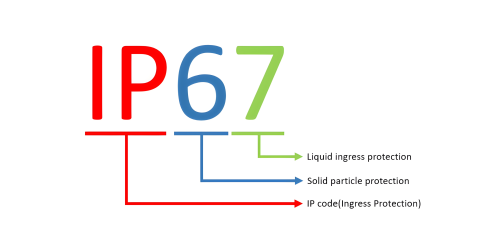
A product spec sheet says "IP67." A datasheet says "IP69K." A customer asks whether your enclosure can handle a monsoon season, or a daily pressure-washer cleaning cycle, or three seconds under a puddle. If you can't translate those two digits into a concrete answer, you're guessing — and in outdoor or industrial deployment, guessing about ingress protection is how warranty claims happen. The IP (Ingress Protection) code, defined by the International Electrotechnical Commission (IEC 60529), exists to remove that guesswork.
The IP rating is a standardized way to describe how well an enclosure resists the intrusion of solid particles — dust, dirt, fine debris — and liquids, from a light drizzle to full submersion. It's used everywhere from smartphones and outdoor lighting to industrial sensors and automotive components, and understanding it properly is the difference between a spec sheet number and a product that survives its intended environment.
Let's break down what the code actually means, who relies on it, and how it gets tested.
Quick answer: "IP" stands for Ingress Protection — the IP code's full form. It's a two-digit rating defined by IEC 60529 (e.g. IP67, IP69K) where the first digit (0–6) rates dust/solid-particle protection and the second digit (0–9K) rates water/liquid protection. It is sometimes informally called "IP resistance" or "IP protection rating," though the correct term is ingress protection rating — it describes how well a sealed enclosure keeps particles and liquids out, not a material's resistance property.
IP Code Structure: Two Digits, Two Very Different Tests
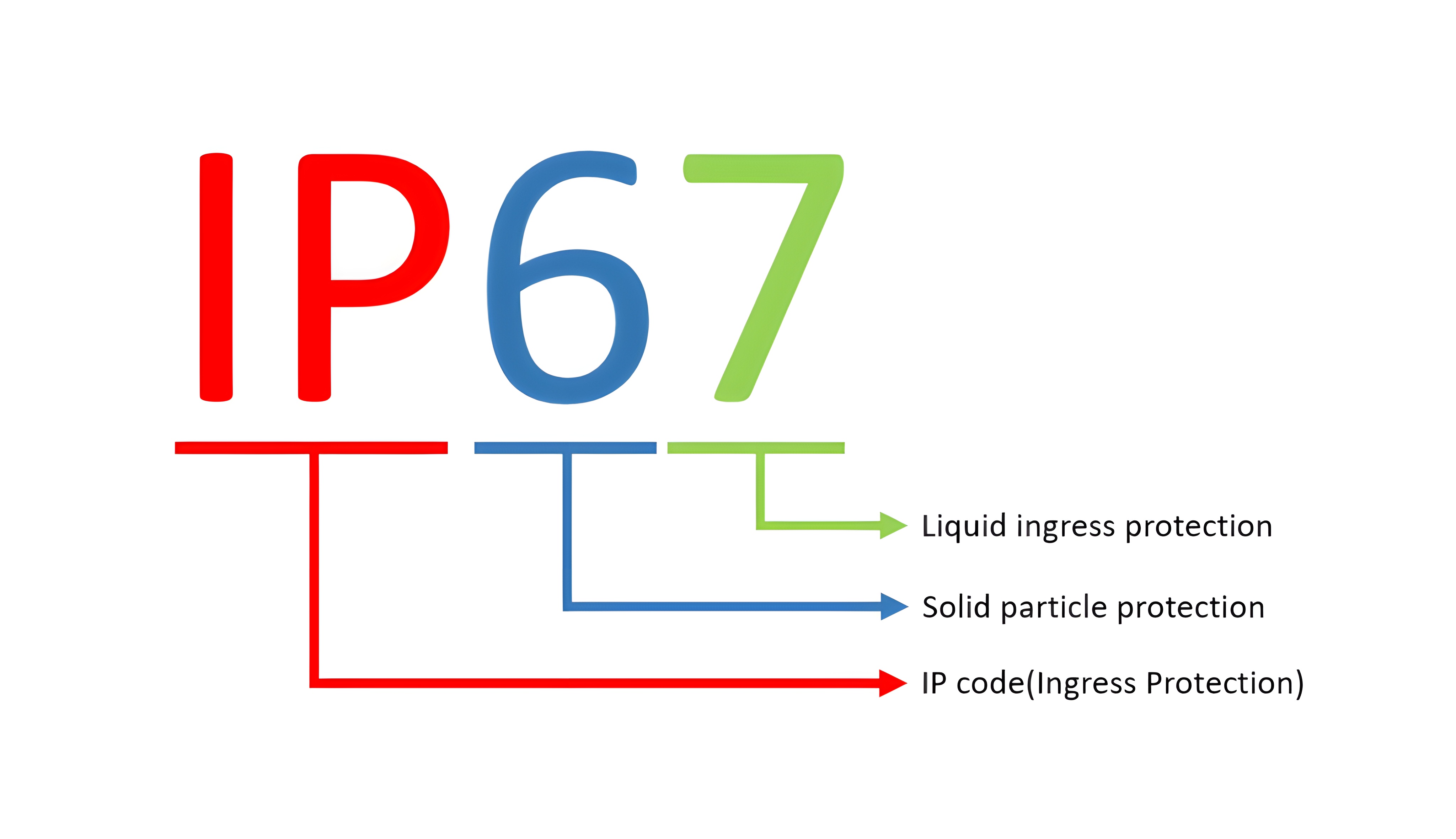
The IP code follows a simple format: the letters "IP" followed by two digits (sometimes a letter, as in 9K). Each digit represents an independent test against a different hazard, and each is measured on its own scale.
- First digit — Dust Protection (0 to 6): Describes resistance to solid particle intrusion. The scale runs from 0 (no protection) to 6, where IP6X denotes a fully dust-tight enclosure with no particle ingress at all.
- Second digit — Water Protection (0 to 9K): Describes resistance to liquid ingress. A higher number means stronger protection: IPX7 or IPX8 indicates the device can survive full immersion to a specified depth and duration, while IPX9K — the toughest classification, often searched as "IP X9" — means it can withstand close-range, high-temperature, high-pressure water jets, the kind used in industrial washdown cleaning.
Because the two digits are tested independently, they should always be read together. An IP54 device is dust-protected against harmful deposits and splash-resistant, but it is not the same as an IP44 device, which handles less dust but similar splash exposure — the digits are not interchangeable shorthand for "rugged." Read them as two separate answers to two separate questions. You'll also see the code written informally as "ip codes," "ipcode," or "code ip" — these all refer to the same IEC 60529 system, just phrased differently in search.
Who Actually Uses the IP Code?
The rating isn't just a marketing checkbox — three distinct groups depend on it for different reasons.
- Consumers: Buyers use the IP rating as a practical shortcut. Someone shopping for a smartphone they'll use hiking or at the beach will look for IP67 or IP68 as a signal that the device tolerates dust and accidental water exposure.
- Manufacturers: Product teams design to a target IP rating from the outset, because it determines gasket selection, seam sealing strategy, connector choice, and enclosure tolerances. A company building outdoor lighting fixtures engineers toward the rating; it isn't something bolted on after the fact.
- Government agencies and test labs: Regulatory bodies and independent certification labs verify that a claimed IP rating actually holds up under the standardized IEC 60529 test procedures, giving the rating real teeth rather than being a self-declared number.
Where IP Ratings Matter Most
Some environments make an IP rating optional. Others make it the deciding factor in whether a product survives its first season in the field.
- Outdoor environments: Surveillance cameras, garden and architectural lighting, and portable outdoor electronics face dust, rain, and temperature swings as a matter of course. IP65 or higher is the practical baseline for this category.
- Industrial environments: Food processing lines, construction equipment, and heavy manufacturing floors often require IP69K — because these environments are cleaned with high-temperature, high-pressure water jets as part of routine hygiene protocol, not occasional exposure.
- Everyday electronics: Smartphones, tablets, and smartwatches increasingly ship at IP67 or IP68, reflecting the reality that "everyday use" now includes rain, spills, and the occasional drop into a sink.
When You Actually Need to Check the Rating
The IP code shows up as a decision point at three specific stages of a product's life — and getting it wrong at any of them is costly.
- Product selection: A hiker choosing a GPS device, or a facilities manager specifying outdoor cameras, uses the IP rating to filter out products that won't survive the intended environment before money changes hands.
- Product design and testing: Manufacturers set an IP target as a design constraint early on — an outdoor lighting fixture aiming for IP65, for instance, drives gasket, seam, and enclosure decisions from the first prototype rather than being retrofitted later.
- Regulatory approval and market readiness: Before a product intended for outdoor or high-exposure use can launch, it typically needs to demonstrate the claimed IP rating to satisfy regulatory and liability requirements — this is what allows a company to market the rating with confidence rather than as an unverified claim.
Why the Rating Is Worth Getting Right
Beyond the pass/fail of a spec sheet, the IP rating has real downstream consequences for safety, cost, and market fit.
- Enhanced safety: In humid or dusty environments, an adequate IP rating reduces the risk of electrical faults caused by moisture or particle intrusion reaching live components.
- Extended product longevity: Devices that meet their rated protection level are less prone to water-induced corrosion or dust-related mechanical failure, which directly reduces warranty claims and repair frequency.
- Alignment with market needs: A correctly specified IP rating lets a manufacturer credibly target rugged, outdoor, or industrial use cases — opening up markets that a standard indoor-only enclosure simply can't compete in.
How IP Ratings Are Actually Tested
An IP rating isn't a self-assessment — it comes from standardized testing, typically performed by an independent lab following IEC 60529 procedures.
- Dust testing: The device is placed in a controlled dust chamber, and inspectors check whether particles penetrate the enclosure in enough quantity to interfere with operation or safety.
- Water testing: The method depends on the target rating — IPX4 involves splash exposure from multiple angles, IPX7 requires timed immersion at a set depth, and IPX9K demands survival under close-range, high-temperature, high-pressure jets.
- Usage labeling: Once a device passes, it's labeled with its verified IP code — the two digits that then appear on the datasheet and packaging as a certified, testable claim rather than a marketing adjective.
Reading the Ratings: Solid Particle Protection (First Digit)
Here's what each level of the first digit actually guarantees, from no protection to fully dust-tight.
| Level | Effective Against | Description |
| 0 | — | No protection against dust or contact. |
| 1 | >50mm objects | Protects against large surfaces but does not prevent intentional contact with larger body parts, such as the back of a hand. |
| 2 | >12.5mm objects | Blocks objects roughly finger-sized from entering the enclosure. |
| 3 | >2.5mm objects | Prevents entry of small tools such as screwdrivers. |
| 4 | >1mm objects | Shields against wires, fine tools, and small insects. |
| 5 | Dust-protected | Allows limited dust ingress that does not interfere with operation. |
| 6 | Dust-tight | No dust ingress whatsoever; full protection against contact. |
Reading the Ratings: Liquid Ingress Protection (Second Digit)
The second digit is where the real range of outdoor and industrial requirements shows up — from a light drip to a high-pressure washdown.
| Level | Protection Against | Effective Against | Volume / Pressure | Test Duration |
| 0 | No protection | — | — | — |
| 1 | Dripping water | Vertical dripping causes no adverse effect. | 1mm/min rain equivalent | 10 minutes |
| 2 | Dripping at 15° | No adverse effect with a 15° tilt. | 3mm/min rain equivalent | 10 minutes |
| 3 | Spraying water | Protected against angled sprays within a 60° vertical range. | 10L/min at 50–150kPa | 5 minutes per side |
| 4 | Water splashes | Resists splashes from any direction. | 10L/min at 50–150kPa | 10 minutes |
| 5 | Low-pressure jets | Tested with 6.3mm nozzle jets from any angle. | 12.5L/min at 30kPa, 3m distance | 3 minutes minimum |
| 6 | High-pressure jets | Resists powerful jets from a 12.5mm nozzle. | 100L/min at 100kPa, 3m distance | 3 minutes minimum |
| 7 | Immersion up to 1m | Withstands brief immersion in water. | — | 30 minutes at 1m depth |
| 8 | Immersion beyond 1m | Long-term immersion at manufacturer-defined depths. | Manufacturer-specified | 1 hour minimum |
| 9K | High-temp, high-pressure jets | Withstands close-range, high-temperature, high-pressure jets. | 14–16L/min at 80–100 bar, 80°C | 30s per 0°, 30°, 60°, 90° rotation |
A quick note on notation: you'll sometimes see this level written as "IP X9" or "IPx9" — this refers to the same IP69K classification above. The "K" specifically denotes the high-temperature, high-pressure jet test defined in DIN 40050-9, on top of the standard IEC 60529 water tests, which is why IP69K is treated as its own tier rather than a simple "9" on the 0–9 scale.
Quick Application Guide
- Consumer electronics for daily outdoor use? IP67 or IP68 covers dust and accidental splash or brief submersion.
- Outdoor lighting, cameras, or garden electronics? IP65 is the practical baseline for sustained rain and dust exposure.
- Food processing or industrial washdown environments? IP69K is required to survive high-temperature, high-pressure cleaning cycles.
- Reading a spec sheet? Always evaluate both digits independently — a strong water rating doesn't imply an equally strong dust rating, and vice versa.
IP Ratings in Practical Use
Modern smartphones commonly ship at IP68 — full dust-tight protection combined with the ability to survive submersion at a manufacturer-specified depth and duration, which is what makes them viable for genuinely outdoor, splash-heavy daily use. Industrial equipment tells a different story: devices used in food processing or automotive maintenance environments often need IP69K specifically because they're cleaned routinely with high-temperature, high-pressure jets — a stress that IP68's immersion test doesn't even simulate. The right rating depends entirely on the actual hazard the product will face, not just the highest number available.
Getting the Rating Right From the Start
An IP rating is only as good as the design and testing discipline behind it. Choosing a target rating late in development — after enclosure geometry, seams, and connectors are already locked in — routinely produces datasheet numbers the actual product can't reliably meet in the field. Building to a specified IP target from the earliest design stage, and validating it against real IEC 60529 test conditions rather than assumption, is what separates a rating that holds up in deployment from one that only holds up in a marketing document.
In short: IP ratings give consumers and manufacturers alike a standardized, testable answer to a very practical question — will this survive the environment it's actually going into. Read both digits, match them to the real-world hazard, and verify rather than assume.
Frequently Asked Questions About the IP Code
What is the IP code full form?
"IP" is short for Ingress Protection. The IP code full form is "Ingress Protection Rating" — a classification system defined by IEC 60529 that describes how well an enclosure resists solid particles (like dust) and liquids (like water).
What is an IP code, in simple terms?
It's a two-digit rating printed as "IP" followed by two numbers — for example IP67 or IP69K. The first digit (0–6) rates protection against dust and solid particles; the second digit (0–9K) rates protection against water and other liquids. Higher numbers mean stronger protection.
What does "IP resistance" mean?
"IP resistance" isn't an official term — it's a common informal way people refer to a device's IP rating or IP protection rating. The correct term is "ingress protection," since the rating measures how well an enclosure keeps dust and water out, rather than a material property like chemical or abrasion resistance.
What does IP X9 (IPX9K) mean?
"IP X9" typically refers to the IP69K rating — the highest liquid ingress protection level. It means the enclosure can withstand close-range washdown with high-temperature (80°C), high-pressure water jets, as used in food processing and industrial cleaning, in addition to passing the standard IEC 60529 water tests.
Is there more than one "IP code"? What are "IP codes"?
"IP codes" (plural) refers to the full range of possible IP ratings — from IP00 (no protection) up to IP69K (dust-tight and washdown-proof). Each specific combination, like IP65 or IP68, is one individual IP code within that system; there isn't a single universal "IP code" that applies to every product.
What's a good IP rating for outdoor use?
IP65 is generally considered the practical baseline for sustained outdoor exposure to dust and rain. For devices that may be briefly submerged, such as smartphones, IP67 or IP68 is more appropriate. Industrial equipment cleaned with pressure washers typically needs IP69K.
Designing to a Target IP Rating: Where IADIY's JDM Service Comes In
Hitting a specified IP rating reliably in production — not just in a single certified prototype — requires design discipline across mechanical sealing, connector selection, and optoelectronic integration. This is where IADIY's Joint Development Manufacturing (JDM) service contributes for customers building sensing and lighting modules for outdoor or industrial deployment.
- Enclosure and seal design: Working with gasket, O-ring, and seam sealing strategies matched to the target dust and water ingress level from the earliest design stage.
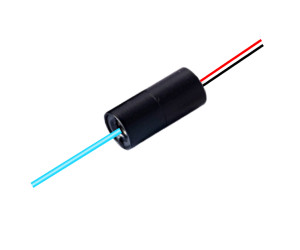
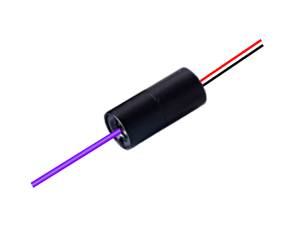
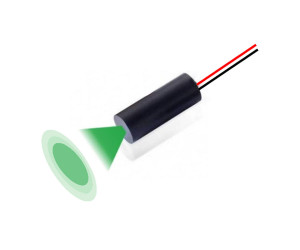
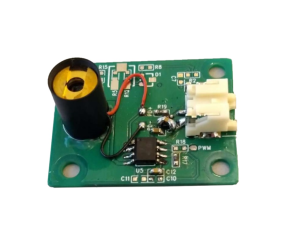
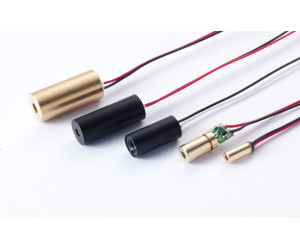
- Optoelectronic integration: Combining laser or optical sources, detector assemblies, and drive electronics into modules where sealing requirements are engineered in, not retrofitted.
- Environmental and reliability validation: Coordinating test procedures aligned with the target IP classification, so the certified rating reflects what the production unit will actually encounter in the field.
If your product needs to hit a specific IP target while integrating precision optics or sensing electronics, that's a design conversation worth having early — before the enclosure is locked in.
Specifying an IP rating for your next outdoor or industrial product? Let's make sure the design can actually meet it in production.
Discuss Your Application With Our Engineers →You can also explore our full range of laser modules, laser sensors, and optoelectronic manufacturing services. Whether you need a standard module or a fully customized, IP-rated solution, the conversation starts with the environment your product needs to survive.







Leave a Comment