


















Laser Safety Classes Explained
A laser pointer and a laser cutter both emit the same kind of light — coherent, collimated, and capable of concentrating a lot of energy into a very small spot. The difference between "handheld toy" and "requires a key switch and safety interlock" comes down entirely to classification. Get it wrong, and you're either over-engineering a harmless pointer or under-protecting the eyes of everyone in the room.
Laser safety is the discipline of designing, using, and labeling laser products to minimize the risk of accidents — above all, eye injuries, since even a small amount of laser light focused on the retina can cause permanent damage. Since the first laser was built in 1964, this risk has been managed through a standardized classification system: IEC 60825-1, which sorts every laser product into one of seven classes based on exactly how much energy can reach an eye under realistic conditions.
Here's how that classification actually works, and what each class means in practice.
What Is Laser Safety?
Laser safety covers the safe design, use, and implementation of lasers to minimize the risk of laser accidents — particularly eye injuries. Because even relatively small amounts of laser light can cause permanent eye damage, the sale and use of all laser products is subject to government regulation, and every laser product on the market is required to carry a classification.
That classification splits into seven tiers: Class 1, Class 1M, Class 2, Class 2M, Class 3R (3A), Class 3B, and Class 4. Regulatory bodies draw the "consumer-safe" line at different points:
- United States: Class 1 through Class 3R (3A) lasers are generally considered safe for consumer use.
- European Union: Consumer laser products are limited to Class 1, Class 1M, Class 2, and Class 2M.
Anyone working with Class 3B or Class 4 lasers must wear safety goggles specifically designed to absorb light at the laser's particular wavelength — general-purpose eyewear does not provide adequate protection.
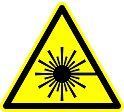
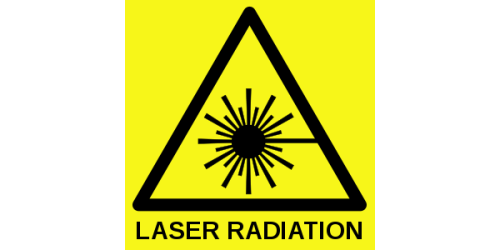
Warning label required for Class 2 and higher laser products
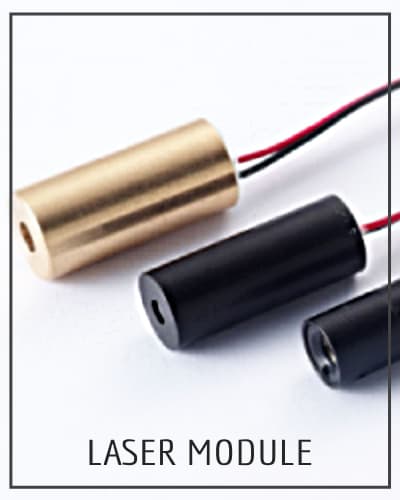
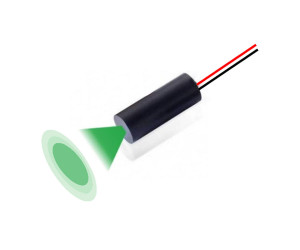
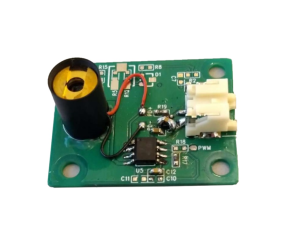
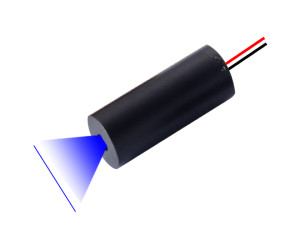
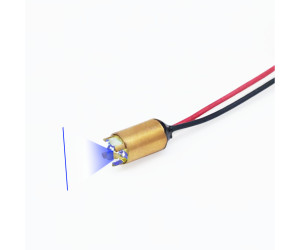
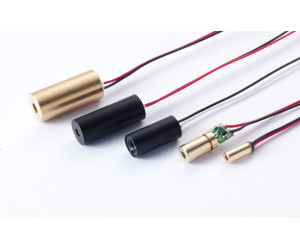
As a professional laser module manufacturer, IADIY's standard laser modules comply with all applicable eye safety requirements, and we support customers through the process of applying for an FDA accession number.
IEC 60825-1: How Laser Classification Actually Works
Laser classification is based on the concept of Accessible Emission Limits (AEL) — defined individually for each class. In practical terms, this is the maximum power (in watts) or energy (in joules) that can be emitted within a specified wavelength range and exposure time, as measured through a defined aperture at a defined distance. The IEC 60825-1 standard sets out the full classification system, and every laser product certified as Class 2 or higher must carry the triangular warning label. Depending on the specific application, additional labels may be required to indicate laser emission points, aperture locations, skin hazards, or invisible wavelengths.
Laser Safety Classes at a Glance
The table below summarizes the key limits and hazard level for each class — use it as a quick reference, then read the detail beneath it for the class relevant to your application.
| Class | Output Limit | Hazard Level | Key Requirement |
| Class 1 | <0.39mW (Ø7mm aperture, 10cm) | Safe under all normal conditions of use, including with magnifying optics. | No warning label required. |
| Class 1M | <0.39mW (Ø7mm aperture, 10cm), divergent beam | Safe with the naked eye; hazardous if viewed through telescopes or microscopes. | "Do not view with optical instruments" label. |
| Class 2 | <1mW, visible light only (400–700nm) | Safe due to the natural blink reflex; may cause eye strain with prolonged staring. | "Do not stare into beam" label. |
| Class 2M | <1mW (Ø7mm aperture, 10cm), divergent, visible only | Safe via blink reflex for the naked eye; hazardous with optical instruments. | "Do not stare or view with optical instruments" label. |
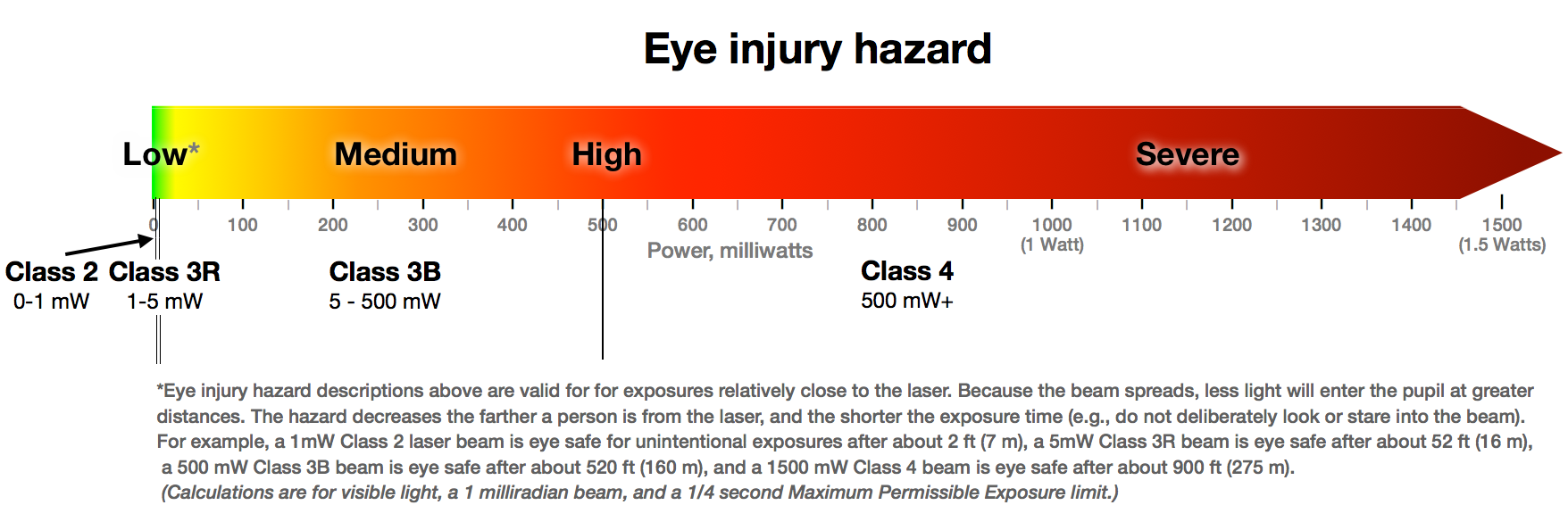
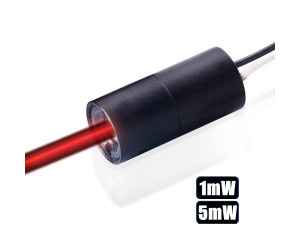
| Class 3R (3A) | <5mW (visible, continuous wave) | MPE can be exceeded, but injury risk is low with careful, restricted viewing. | "Avoid direct eye exposure" label. |
| Class 3B | <0.5W CW (315nm–far IR); 30mJ pulsed (400–700nm) | Hazardous on direct eye exposure; diffuse reflections (e.g. off paper) are not harmful. | Key switch, safety interlock, "Avoid exposure to beam" label. |
| Class 4 | Exceeds Class 3B AEL | Can burn skin and cause permanent eye damage from direct, diffuse, or indirect viewing; fire risk. | Key switch, safety interlock, "Avoid eye or skin exposure" label. |
Laser Distance and Eye Safety: What "Safe Range" Actually Means
Quick answer: There is no maximum safe distance for a Class 1 laser — it is defined as eye-safe under all conditions of normal use, at any range, including continuous direct viewing. Class 2 works the same way for visible light, relying on the blink reflex rather than distance. Distance only becomes a genuine safety factor starting at Class 3R, where the standard explicitly allows the Maximum Permissible Exposure (MPE) to be exceeded at close range.
This is the single most confused concept in laser classification, and it's worth being precise about it. "How far can a Class 1 laser travel" actually has two different answers depending on what's being asked:
- Eye-safety distance: For Class 1 and Class 2, this question doesn't really apply — the classification itself guarantees the beam stays below the MPE at every distance, under every normal viewing condition. There's no "safe distance" threshold to calculate because the AEL is defined so the hazard never exists in the first place, regardless of range.
- Functional / operating range: This is a completely separate, application-specific question — how far a laser rangefinder, alignment tool, or sensor's beam remains usable for its intended job (detectable, measurable, visible). A Class 1 laser rangefinder can have a functional range of tens of meters while remaining eye-safe at every point along that path, because eye safety and operating range are governed by different physics.
From Class 3R upward, this changes. The standard permits the MPE to be exceeded at 3R, which means real injury risk does depend on viewing distance, beam divergence, and exposure duration — this is where the concept of Nominal Ocular Hazard Distance (NOHD) becomes meaningful (see the Class 4 section below). Because NOHD depends on the specific product's power, beam divergence, and wavelength, it cannot be reduced to one universal number for "a Class 3R laser" in general — it has to be calculated per device, and a compliant product's documentation should state it.
Laser Class 1
Output Power <0.39mW through a Ø7mm aperture at 10cm distance
A Class 1 laser is safe under all conditions of normal use — meaning the Maximum Permissible Exposure (MPE) cannot be exceeded whether viewed with the naked eye or through typical magnifying optics like a telescope or microscope. To verify compliance, the standard specifies exactly which aperture and viewing distance apply. This means a high-power laser with a very large or highly divergent beam can still be classified as Class 1, provided the power passing through the standard's defined aperture stays under the Class 1 AEL. Devices such as optical disc drives are often Class 1 for this reason — they fully contain a more powerful internal beam so that no hazardous light escapes under normal use.
On distance specifically: because the classification already guarantees the beam stays under the MPE at any range, there is no "maximum safe distance" figure for a Class 1 laser in the way there is for higher classes — it's eye-safe at 10cm and it's eye-safe at 100m, by definition. The 10cm figure that appears in the classification is a fixed test-aperture distance used to measure compliance, not a safety limit the beam becomes dangerous beyond.
Laser Class 1M
For divergent lasers, output power <0.39mW through a Ø7mm aperture at 10cm distance
A Class 1M laser is safe under all conditions of use except when viewed through magnifying optics such as microscopes or telescopes. Class 1M lasers produce either large-diameter or divergent beams, and the MPE normally cannot be exceeded unless focusing or imaging optics are used to narrow the beam. A laser qualifies as Class 1M when the power passing through the naked eye's pupil stays below the Class 1 AEL — the risk only appears once that beam gets concentrated by an external instrument.
Laser Class 2
Output Power <1mW
A Class 2 laser is considered safe, but may cause eye strain if someone stares directly into the beam for a prolonged period. This classification is only available for visible-light lasers (400–700nm) — infrared and ultraviolet lasers cannot qualify for Class 2 or 2M, since the protective mechanism relies on the visible beam triggering the eye's blink reflex. Class 2 lasers are limited to 1mW continuous wave, with higher instantaneous power permitted if the emission time is under 0.25 seconds.
On distance: like Class 1, Class 2 safety is not distance-limited — the blink reflex protection applies regardless of how far the beam has traveled, as long as the power stays within the Class 2 limit. There's no separate "Class 2 laser distance" hazard threshold to observe; the relevant number is the power limit, not the range.
Laser Class 2M
For divergent lasers, output power <1mW through a Ø7mm aperture at 10cm distance
A Class 2M laser is safe thanks to the blink reflex, as long as it isn't viewed through optical instruments. As with Class 1M, this applies to beams with a large diameter or significant divergence, where the amount of light passing through the naked-eye pupil stays within Class 2 limits — but concentrating that light with a lens or scope removes the margin of safety.
Laser Class 3R (3A)
Output Power <5mW
A Class 3R laser is considered safe if handled carefully, with restricted beam viewing. The MPE can be exceeded at this class, but the risk of injury remains low. Visible continuous-wave lasers in Class 3R are capped at 5mW; different limits apply for other wavelengths and for pulsed lasers.
On distance: Class 3R is where "safe distance" starts to genuinely matter, because the standard permits the MPE to be exceeded at close range — unlike Class 1 or 2. The actual Nominal Ocular Hazard Distance depends on the specific product's power, beam divergence, and wavelength, so it can't be reduced to a single number for "a Class 3R laser" in general; a compliant product's datasheet should specify it for that exact device.
Can a Class 3R laser burn paper? No. At a maximum of 5mW, Class 3R output is far below the power density needed to ignite or mark most materials. Burning or marking capability starts to appear at Class 4, where output specifically exceeds the Class 3B AEL and the standard explicitly notes a fire risk from ignition of combustible materials.
Laser Class 3B
Output Power <0.5W
A Class 3B laser is hazardous on direct eye exposure, though diffuse reflections — such as light scattering off paper or other matte surfaces — are not harmful. The AEL for continuous-wave lasers between 315nm and the far infrared is 0.5W (500mW); for pulsed lasers between 400 and 700nm, the limit drops to 30mJ. Class 3B laser products must be equipped with a key switch and a safety interlock. Notably, Class 3B lasers are used inside CD and DVD writers — the writer unit itself is classified as Class 1 because the housing fully contains the beam and no hazardous light escapes under normal use.
Laser Class 4
Class 4 is the highest and most dangerous laser classification, covering every laser that exceeds the Class 3B AEL — that is, above 500mW continuous wave or above 30mJ pulsed in the visible range. By definition, a Class 4 laser can burn skin or cause permanent eye damage from direct, diffuse, or even indirect beam viewing. These lasers can also ignite combustible materials, making fire a genuine risk in the working environment. Class 4 products must be equipped with a key switch and a safety interlock. Most industrial, scientific, military, and medical lasers fall into this category — and medical applications in particular require careful awareness of Nominal Ocular Hazard Distance (NOHD) and Nominal Ocular Hazard Area (NOHA) when the beam is divergent.
Quick Reference: Who Handles What
- General consumers (US): Class 1 through Class 3R (3A) products are generally considered safe.
- General consumers (EU): Only Class 1, 1M, 2, and 2M products are permitted for consumer sale.
- Trained operators only: Class 3B and Class 4 lasers require wavelength-matched safety goggles, a key switch, and a safety interlock — never treat these as consumer-grade.
- Choosing a module for your product? Match the class to your actual use case and target market's consumer regulations before finalizing the design — retrofitting safety compliance after the fact is far more expensive than designing for it from the start.
Frequently Asked Questions About Laser Distance and Safety
How far can a Class 1 laser travel and still be eye-safe?
There's no maximum distance. A Class 1 laser is defined as safe under all conditions of normal use, at any range, including continuous direct viewing — the classification guarantees the beam stays below the Maximum Permissible Exposure (MPE) regardless of how far it has traveled. Its actual functional range for a given application (e.g. a rangefinder) is a separate, unrelated question governed by beam power and divergence, not eye safety.
What is the maximum safe distance for a Class 1 laser?
There isn't one to calculate — that's the defining feature of Class 1. Unlike Class 3R and above, where the standard allows the MPE to be exceeded at close range, Class 1's Accessible Emission Limit is set low enough that the MPE is never exceeded at any distance, so no "safe distance" threshold applies.
What is the safe distance for a Class 3R laser?
It depends on the specific product — Class 3R is the first class where distance genuinely affects safety, since the standard permits the MPE to be exceeded at close range. The actual Nominal Ocular Hazard Distance (NOHD) depends on that laser's power, beam divergence, and wavelength, so it must be calculated per device rather than quoted as a single figure for "Class 3R" in general. Check the specific product's documentation.
Can a Class 3R laser burn paper?
No. Class 3R is capped at 5mW, far below the power density needed to burn or mark most materials. Ignition and marking hazards start at Class 4, which specifically exceeds the Class 3B AEL and carries an explicit fire risk from igniting combustible materials.
What's the difference between Class 1 and Class 1M lasers?
Both are limited to under 0.39mW through a Ø7mm aperture at 10cm. The difference is beam geometry: Class 1 is safe even when viewed through magnifying optics like a telescope or microscope, while Class 1M has a large or divergent beam that stays safe to the naked eye but becomes hazardous if concentrated by an external optical instrument.
What's the difference between Class 2 and Class 2M lasers?
Both are limited to under 1mW of visible light and rely on the eye's blink reflex for protection. Class 2 is safe under all normal viewing conditions; Class 2M has a large-diameter or divergent beam that remains safe to the naked eye but is hazardous if viewed through telescopes, microscopes, or other magnifying optics.
What is the AEL for Class 3B and Class 4 lasers in milliwatts?
Class 3B's Accessible Emission Limit for continuous-wave visible-to-near-infrared lasers is 500mW (0.5W); pulsed lasers between 400–700nm are limited to 30mJ. Any laser exceeding those limits is classified as Class 4.
Related Video
Compliant by Design: Where IADIY's JDM Service Comes In
Hitting a target laser safety class isn't just a matter of dialing down output power — it involves aperture design, beam divergence control, wavelength selection, and interlock integration, validated against the actual IEC 60825-1 test geometry rather than assumed on paper. This is where IADIY's Joint Development Manufacturing (JDM) service contributes for customers building laser-based products.
- Classification-driven design: Engineering beam power, divergence, and aperture characteristics to a specified target class from the earliest design stage.
- Labeling and documentation: Supporting the correct warning label selection and required documentation for the target market's regulatory requirements.
- FDA accession support: Assisting customers through the process of applying for an FDA accession number for laser products sold into the US market.
- Optoelectronic integration: Combining laser sources, optics, and drive electronics into modules that meet eye safety requirements without over-engineering the output for the application's real use case.
If your product needs to hit a specific laser safety classification while integrating precision optics or sensing electronics, that's a design conversation worth having early — before the optical path is locked in.
Designing a laser-based product and need help getting the classification right? Let's talk through your application.
Discuss Your Application With Our Engineers →Reference
- More on laser safety: en.wikipedia.org/wiki/Laser_safety
- IEC 60825-1:2014 official standard: webstore.iec.ch/publication/3587
- IEC 60825-1 Edition 1.2 reference document: Download PDF
- FDA accession number application form (FDA 3632): Download PDF
You can also explore our full range of laser modules, laser sensors, and optoelectronic manufacturing services. Whether you need a standard module or a fully customized, safety-compliant solution, the conversation starts with the class your application actually requires.







Leave a Comment